


Sushama Paul Mandal, The News National
The Namo Bharat Rapid Rail has become the new identity of India along with Vande Bharat Express and Amrit Bharat Express trains.
Formerly known as Vande Metro, the Namo Bharat Rapid Rail has been designed with the aim of providing world-class rail service between short-distance cities.
The Namo Bharat Rapid Rail has created a new milestone in the field of intercity travel.
Howrah to Digha Namo Bharat Rapid Rail, Howrah-Digha Vande Metro
Currently, a total of two Namo Bharat Rapid Rail are in operation.
These are – Ahmedabad to Bhuj, and Jaynagar to Patna. The Ministry of Railways is set to introduce this ‘mini’ version of the Vande Bharat Express train on various routes including on the Howrah-Digha route.
The Ministry of Railways is set to launch its newest service, the Namo Bharat Rapid Rail, which will connect Kolkata and the coastal resort town of Digha. This train will cover 186 km in under 3 hours, ensuring faster connectivity and easier passenger travel.
This will be India’s third Namo Bharat Rapid Rail service, providing an efficient and comfortable experience on short-distance routes. Key stops on this popular route include Santragachi Junction, Uluberia, Mecheda, Tamluk, and Kanthi PH.
The schedule for the train is as follows:
Departure from Howrah Railway Station at 7 am and arrival in Digha by 9:45 am.
Departure from Digha Railway Station at 5 pm and arrival at Howrah Railway Station at 7:45 pm.
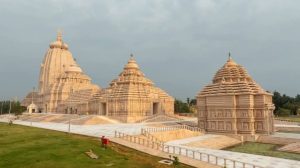
The Howrah to Digha Namo Bharat Rapid Rail will have 16 coaches. All the coaches will be air-conditioned. The fare for travelling on the Howrah-Digha Namo Bharat Rapid Rail will be unreserved and is likely around Rs 400- Rs 450.
Built over 24 acres and inspired by the iconic 12th century Jagannath Temple in Puri, the Digha temple is a significant addition to the religious and cultural landscape of Bengal, symbolising both devotion and architectural splendour.
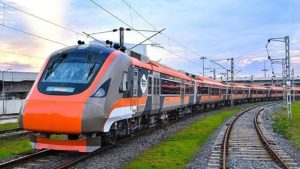
The temple complex comprises four key components: the Vimana (Garbha Griha or sanctum sanctorum), the Jagamohan (assembly hall), the Nat Mandir (dancing hall) and the Bhog Mandap (offering hall), all echoing the classic elements of Vedic temple architecture.