

Liza Chatterjee, Bharat Newz, New Delhi
The Trinamool Congress (TMC) launched a powerful overnight protest on the steps of Parliament after the central government’s decision to remove Mahatma Gandhi’s name from the 100 days work scheme. Braving the biting winter cold, TMC Members of Parliament sat through the night with blankets, placards, and portraits of Bengal’s greatest icons, sending a strong message against what they called an assault on history, values, and federal rights.
The protest came during the Winter Session of Parliament, where the BJP-led central government allegedly pushed through the decision despite strong objections from opposition parties. According to the TMC, replacing Mahatma Gandhi’s name with a religious reference is not merely an administrative change, but a deliberate attempt to rewrite the moral and historical foundation of one of India’s most important welfare schemes.
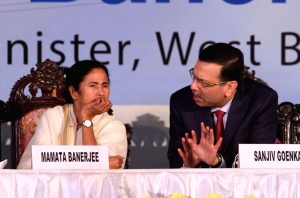
A day earlier, West Bengal Chief Minister Mamata Banerjee had sharply criticised the move from the stage of a state-level industrial meet. She reiterated that Bengal would continue to honour Mahatma Gandhi by keeping his name associated with public welfare initiatives. Her remarks set the tone for the dramatic overnight protest that followed in Parliament.
What made the TMC demonstration stand out was its cultural dimension. Throughout the night, MPs displayed images of Mahatma Gandhi, Rabindranath Tagore, Swami Vivekananda, and Michael Madhusudan Dutt—symbols of Bengal’s intellectual and cultural heritage. Protesters alternated between Rabindra Sangeet and Nazrul Geeti, turning the Parliament steps into a space of peaceful yet firm resistance. Rajya Sabha MPs including Ritabrata Banerjee, Dola Sen, Sagarika Ghose, Mausam Benazir Noor, and Saket Gokhale remained present through the night.
When Parliament proceedings resumed the next day, the protest gained broader momentum. MPs from the INDIA alliance—including the Samajwadi Party, Congress, Aam Aadmi Party, and Shiv Sena—joined the TMC protest. Alongside the issue of Mahatma Gandhi’s name, opposition leaders also raised demands for the release of pending central dues to West Bengal, accusing the Centre of discriminating against opposition-ruled states.
The most notable presence at the protest was that of Samajwadi Party MP and veteran actor Jaya Bachchan. Standing shoulder to shoulder with TMC MPs, she joined in singing Bengal’s state anthem, symbolically underlining her solidarity with the state’s cultural identity. Her words struck a sharp political chord.
Jaya Bachchan warned that Bengal cannot be silenced through force or legislative muscle. “Insulting Bengali icons and pushing laws without consensus will only strengthen the resolve of Bengal’s people,” she said. According to her, the more Bengal is disrespected, the stronger its people become.
Referring to the famous quote, “What Bengal thinks today, India thinks tomorrow,” Jaya Bachchan highlighted Bengal’s long tradition of political awareness and intellectual leadership. She added that Bengalis often anticipate the nation’s future direction before others do.
Looking ahead to the 2026 West Bengal Assembly elections, Jaya Bachchan expressed confidence that Mamata Banerjee would return to power with a decisive mandate. “The people of Bengal are progressive and know whose hands are safest for the state’s future,” she said.

The overnight protest in Parliament has since emerged as more than a reaction to a policy decision. It has become a broader assertion of Bengal’s identity, its cultural pride, and its resistance to what opposition parties see as an attempt to marginalise dissenting voices at the national level.