Bharat Newz 24*7
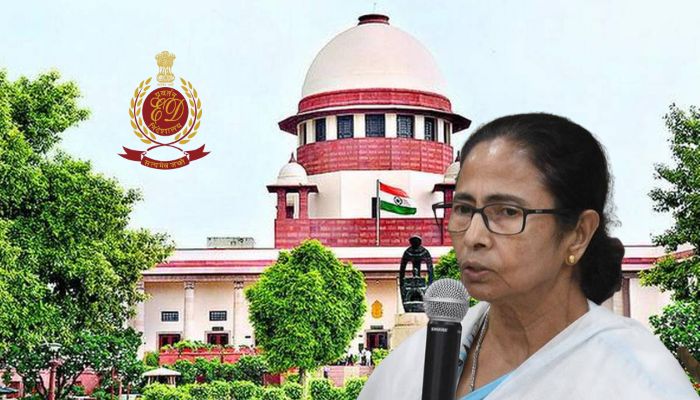
In a significant and unprecedented development in India’s electoral history, the Supreme Court of India has ordered that the Special Intensive Revision (SIR) process in West Bengal be completed under judicial supervision. The directive comes after arguments presented by West Bengal Chief Minister Mamata Banerjee’s legal team, who raised concerns about the manner in which the revision process was being conducted.
At the same time, the Court strongly criticized the state administration for what it described as a lack of cooperation with the Election Commission of India (ECI). The Chief Justice observed that the situation surrounding the SIR process in the state was “exceptional” and required judicial intervention to ensure transparency and fairness.
Judicial Officers to Oversee SIR
In its order, the Supreme Court made it clear that judicial officers will now supervise the completion of the SIR exercise. Importantly, the responsibility of appointing these judicial officers has been entrusted to the Chief Justice of the Calcutta High Court.
The Court also directed that the final voter list must be published by February 28. Judicial officers will have the authority to take final decisions in matters arising from the revision process. However, the Court clarified that they should not be engaged in this assignment for an extended period.
Sharp Observations on State Cooperation
During the hearing, senior advocate Kapil Sibal, appearing for the state, informed the Court that the publication of the voter list had been stalled. According to him, the ECI had halted document uploads from February 15 following earlier court directions.
In response, the Election Commission stated that it had requested additional Group-B officers from the state to assist with the SIR process. However, the state government reportedly replied that the matter was “under consideration.”
Expressing dissatisfaction, the Chief Justice noted that he had expected full cooperation from the state after previous court directions. He observed that either the state lacked adequate personnel, which would be a legal issue, or it was unwilling to release officers for election duty. In such a case, the Commission would be permitted to bring in its own officers to ensure the process continues smoothly.
Concerns Over Law and Order
The Court also took note of reports of minor incidents of violence linked to the SIR process and sought a status report on the situation. It emphasized that failure to complete the SIR could lead to serious complications, potentially affecting the conduct of elections.
While the state’s counsel requested additional time—seeking a 48-hour extension for raising objections to the draft voter list—the Court maintained that the February 28 deadline for publishing the final list must be respected. The Court added that additional names, if necessary, could be included later through supplementary lists.
A Landmark Intervention
The ruling has sparked strong political reactions. Leaders from the ruling party in West Bengal have welcomed the decision, calling it historic. They argue that judicial oversight will enhance transparency and ensure fairness.
Beyond immediate politics, the order reinforces a broader principle: when institutional coordination breaks down, the judiciary can step in to safeguard democratic processes. With judicial supervision now mandated, the focus shifts to whether the SIR process can be completed smoothly and on time—without further controversy.
The coming days will determine how this rare judicial intervention reshapes election administration in West Bengal.