Bharat Newz 24*7
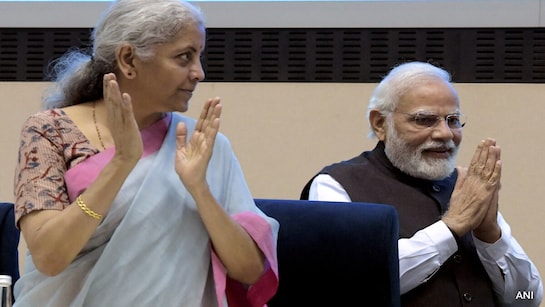
For the first time in independent India’s history, the Union Budget was presented on a Sunday. Finance Minister Nirmala Sitharaman tabled the Union Budget for 2026–27 in the Lok Sabha, breaking convention and setting the tone for what the government describes as a reform-driven, future-oriented financial roadmap.
While the budget did not offer headline-grabbing tax giveaways typically seen ahead of major elections, it clearly signalled a strategic shift—placing long-term infrastructure, industrial growth, and targeted development of poll-bound states at the centre of fiscal planning.
A Budget Without Flashy Sops, But With Strategic Intent
Unlike previous pre-election budgets that leaned heavily on broad-based tax relief and consumer-focused incentives, Union Budget 2026 took a measured approach. There were no dramatic announcements designed purely for instant applause. Instead, the government focused on durable infrastructure, connectivity, education, and industrial ecosystems—particularly in states heading into assembly elections.
West Bengal, Assam, Tamil Nadu, Puducherry, and Kerala are among the states scheduled to go to the polls this year. Except for Kerala, elections in most of these states are expected between March and April. While West Bengal did not receive any single blockbuster announcement, it remained deeply embedded across several national projects—marking a clear shift from last year’s Bihar-centric budget narrative.
In the previous budget, Bihar received projects worth nearly ₹58,900 crore, drawing sharp political attention. This time, the approach was noticeably more balanced, with moderated but wider distribution of initiatives.
Prime Minister Modi’s Strong Endorsement
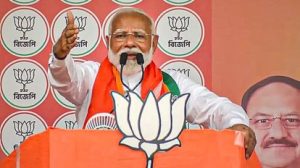
Soon after the budget presentation, Prime Minister Narendra Modi addressed the nation, calling Union Budget 2026 a “people-centric” and “historic” document.
“This budget reflects the aspirations of the people. It moves India decisively towards becoming the world’s third-largest economy,” Modi said. He highlighted the budget’s emphasis on economic reform, inflation control, self-reliance, and employment generation.
Describing it as an accelerator for the government’s reform agenda, the Prime Minister said the budget would give fresh momentum to flagship initiatives like Make in India and Atmanirbhar Bharat. He also pointed to the renewed focus on women’s self-help groups, tourism—especially in the North-East—and the strengthening of modern economic ecosystems.
Modi characterised the budget as one that would “speed up the Reform Express,” reinforcing India’s manufacturing and investment climate.
Poll-Bound States Clearly in Focus
Finance Minister Sitharaman announced several region-specific projects that subtly but clearly aligned with electoral timelines.
A major highlight was the proposal to establish dedicated mineral parks in Odisha, Tamil Nadu, and Andhra Pradesh. In addition, the government proposed a rare earth corridor across mineral-rich states such as Odisha, Kerala, Andhra Pradesh, and Tamil Nadu—aimed at strengthening mining, processing, research, and manufacturing capabilities in critical minerals.
The budget also gave a significant push to India’s high-speed rail ambitions. Seven new high-speed rail corridors were proposed, connecting Tier-2 and Tier-3 cities with major urban centres. These corridors are designed to provide a cleaner, faster alternative to short-haul flights and congested highways.
Key routes include Pune–Mumbai, Pune–Hyderabad, Hyderabad–Bengaluru, Bengaluru–Chennai, Hyderabad–Chennai, Delhi–Varanasi, and Varanasi–Siliguri. Together, these corridors are expected to integrate industrial hubs, technology centres, pilgrimage cities, and emerging urban clusters across eastern, southern, western, and northern India.
Notably, Durgapur will be linked to the North-East Industrial Corridor, strengthening eastern India’s role in national logistics and manufacturing networks.
Eastern India and Durgapur Get a Strategic Push
Eastern and North-Eastern India featured prominently in the budget’s development narrative. Sitharaman announced the creation of a new industrial corridor centred around Durgapur, positioning it as a critical node within the Integrated East Coast Corridor.
According to the Finance Minister, this corridor will play a transformative role in manufacturing, logistics, and employment generation. Leveraging Durgapur’s existing industrial base and strategic location, the government aims to strengthen eastern India’s footprint on the national industrial map.
Additionally, five new tourism hubs are planned across eastern India, alongside the introduction of nearly 4,000 electric buses to promote eco-friendly travel and sustainable tourism.
Strong Emphasis on Professional Education and Healthcare
Union Budget 2026 placed renewed emphasis on skill development and professional education. The government announced support for institutions such as ICAI and ICSI to design short-term modular courses aligned with industry needs.
In healthcare, five medical hubs will be developed with private sector participation. Three new All India Institutes of Ayurveda will be established nationwide, alongside dedicated infrastructure for medical tourism.
An All India Institute of Design will be set up in eastern India, while women’s participation in higher education will be boosted through the construction of women’s hostels in every district.
What Gets Cheaper and What Gets Costlier
The budget brought relief on essential fronts. Prices of 17 life-saving drugs, including medicines for cancer and diabetes, will come down. Sports equipment, leather goods, electric vehicle batteries, electric scooters, cars, smartphones, tablets, solar panels, and microwave ovens are also set to become more affordable.
However, the budget was less generous for luxury and sin goods. Alcohol, cigarettes, pan masala, and gutkha will become more expensive due to revised GST rates and the continuation of sin taxes. Prices of key minerals such as coal, iron, and salt are also expected to rise.
Big Boost for Content Creators and the Orange Economy
One of the most forward-looking announcements was aimed at India’s growing digital content ecosystem. The government will support the establishment of AVGC (Animation, Visual Effects, Gaming, and Comics) labs in 15,000 secondary schools and 500 colleges across the country.
Implemented in collaboration with the Indian Institute of Creative Technologies in Mumbai, this initiative aims to strengthen the “Orange Economy”—India’s creative industries. With demand for nearly 2 million skilled professionals projected by 2030, the move is expected to generate large-scale employment and global competitiveness.
Major Announcements for Women and Agriculture
The Finance Minister announced women’s hostels in every district, backed by the construction of 16,000 new secondary schools. An allocation of ₹2,000 crore was earmarked for strengthening self-reliance initiatives.
Income tax filing processes will be simplified, with new laws effective from April 1, 2026, and revised ITRs allowed until March 31.
In agriculture, the government will focus on strengthening dairy and poultry sectors, expanding crop diversification, and promoting high-value produce such as sandalwood, coconut, cashew, and nuts—particularly in the North-East.

Artificial Intelligence Gets Strategic Attention
Artificial Intelligence emerged as another priority area. Sitharaman proposed the formation of a dedicated panel to study AI’s impact on the service sector. This follows the Economic Survey’s balanced view—highlighting AI’s potential while cautioning against job disruptions.
The government’s intent is clear: ensure India remains competitive globally while responsibly managing technological transition.
A Budget Built for the Long Run
Union Budget 2026 may not have delivered instant gratification, but it laid out a clear long-term vision—anchored in infrastructure, innovation, regional balance, and sustainable growth. As political temperatures rise in poll-bound states, the budget reflects a calculated blend of economic reform and electoral awareness, positioning itself as a foundation for India’s next growth phase.