
Bharat Newz 24*7
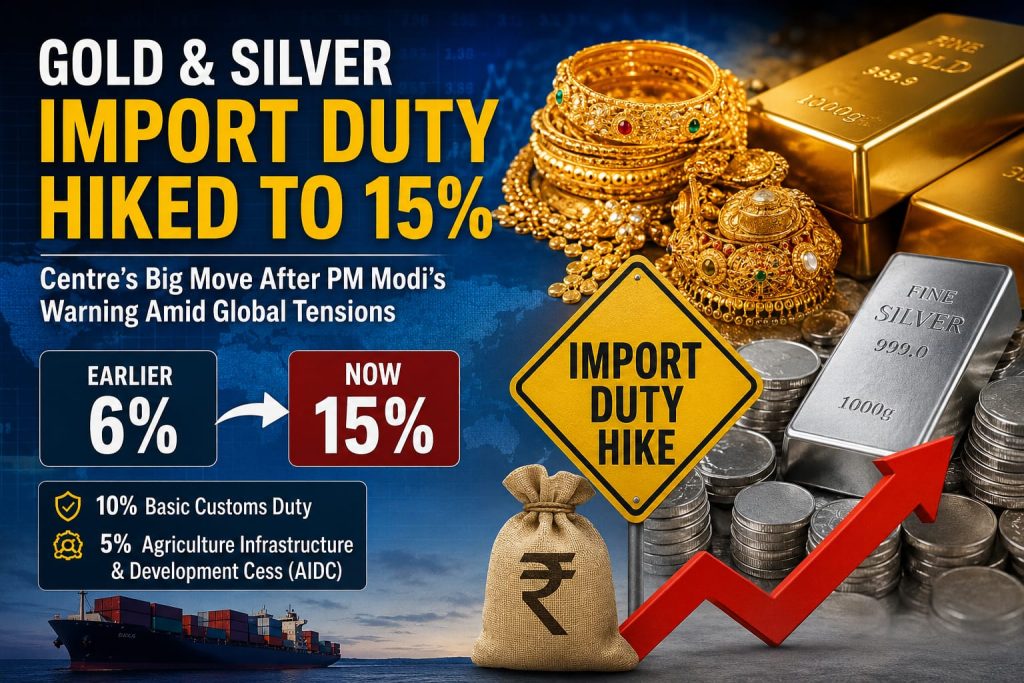
India’s gold market has been jolted by one of the sharpest policy moves in recent years. Days after Prime Minister Narendra Modi publicly appealed to citizens to avoid purchasing gold for at least a year, the Centre has now raised import duty on gold and silver from 6 percent to 15 percent — more than doubling the tax burden on precious metal imports.
The decision, announced by the Union government on Wednesday, comes against the backdrop of escalating tensions in West Asia, rising pressure on India’s foreign exchange reserves, and a weakening rupee against the US dollar. Under the revised structure, the government has imposed a 10 percent Basic Customs Duty along with a 5 percent Agriculture Infrastructure and Development Cess (AIDC) on imported gold and silver.
The move has sent shockwaves through India’s jewellery sector, bullion traders, exporters, and middle-class buyers preparing for the upcoming festive and wedding seasons.
Why Has the Government Suddenly Increased Gold Import Duty?
The government’s primary concern appears to be India’s growing dependence on imported gold at a time when global geopolitical tensions are intensifying. The Iran-US conflict and uncertainty in crude oil markets have already put pressure on India’s import bill. Now policymakers fear that excessive gold imports could further strain the country’s foreign currency reserves.
Gold is among India’s biggest import commodities after crude oil. When global uncertainty rises, Indians traditionally invest more heavily in gold, considering it a “safe haven” asset. But increased gold imports also mean a larger outflow of dollars from India’s forex reserves.
Officials believe curbing gold imports could help reduce the trade deficit and stabilize the rupee, which has been facing sharp pressure in international currency markets. Concerns within the financial establishment have reportedly grown after the rupee touched record low levels against the dollar.
The Prime Minister’s unusually direct public appeal earlier this week now appears to have been a precursor to the government’s aggressive policy intervention.
Modi’s Appeal Was the First Signal
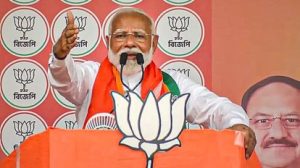
Last Sunday and again on Monday, Modi urged citizens to temporarily avoid buying gold for one year in the larger national interest. His remarks surprised economists and market observers because such direct appeals regarding consumer purchasing habits are extremely rare.
At the time, many believed the Prime Minister was merely cautioning citizens amid global uncertainty. But within days, the government followed up with a major fiscal step.
The suddenness of the announcement has caught traders and jewellers off guard. Many in the bullion industry say there was little consultation or warning before the steep duty hike was implemented.
Economists Warn of Ripple Effects
Economist Shaibal Kar expressed concern over the broader economic implications of the decision. Translating his remarks into English, he said:
> “The Prime Minister had already advised people not to buy gold for a year. Now, instead of relying on public restraint, the government has imposed heavy import duties. The cost of importing gold bars from foreign markets will rise sharply.”
Kar also warned that the policy may hurt thousands of livelihoods connected to India’s jewellery ecosystem.
> “Jewellery and gems are among India’s major export industries. The supply chain connected to Mumbai’s Zaveri Bazaar is deeply linked with Kolkata’s manufacturing units. A significant portion of jewellery crafting happens in Kolkata before products move to Mumbai and then to international markets.”
According to him, while the government may be trying to conserve foreign exchange reserves, the policy could simultaneously damage export earnings generated by India’s gems and jewellery sector.
> “If the crisis is truly this severe, then there should have been broader consultation before imposing such a major duty hike,” he added.
Kolkata’s Jewellery Industry Could Feel the Heat
The decision may have a particularly strong impact in West Bengal, especially in Kolkata, where thousands of artisans and small workshops depend on the gold jewellery trade.
Kolkata remains one of India’s largest traditional jewellery manufacturing hubs. Many handcrafted ornaments produced in the city are supplied to markets across Mumbai, Delhi, the Gulf countries, and Southeast Asia.
Industry insiders fear the sharp increase in import costs could eventually reduce demand, affecting not just big jewellers but also small craftsmen, gold polishers, stone setters, transport workers, and exporters.
Several traders also fear that higher import duties may once again encourage illegal gold smuggling networks — an issue India has battled repeatedly whenever customs duties were sharply raised in the past.
Buyers Likely to Step Back
India is the world’s second-largest consumer of gold and the largest consumer of silver. But with international prices already at historic highs, the added import duty is expected to make precious metals even more expensive for ordinary consumers.
Economic analysts believe retail demand may weaken significantly over the coming months. Wedding purchases, festival buying, and investment-driven gold purchases could all slow down as prices rise further.
Yet the timing is interesting.
Despite soaring prices over the past year, demand for gold in India has remained remarkably strong. According to figures from the World Gold Council, investment in India’s Gold Exchange Traded Funds (Gold ETFs) surged by 186 percent in the March quarter compared to the same period last year, reaching nearly 20 metric tonnes.
This indicates that investors continue viewing gold as a reliable hedge against uncertainty, inflation, and global instability.
Import Curbs Had Already Begun Quietly
Signs of tightening had already started emerging in recent months.
Gold and silver imports already attract 3 percent GST in India. Several banks had also reportedly slowed bullion imports due to market conditions and regulatory caution. Data from April showed that India’s gold imports had already fallen to one of the lowest levels seen in nearly three decades.
The latest duty hike now signals that the government is prepared to take even tougher measures if external economic pressure intensifies further.
Bigger Questions Ahead
The Centre’s aggressive duty hike has opened up larger questions about the health of India’s foreign exchange reserves and the government’s reading of the global economic situation.
Is this merely a temporary precaution linked to geopolitical tensions? Or does New Delhi anticipate a prolonged period of global financial instability and dollar pressure?
For now, one thing is certain: gold — long considered India’s emotional and financial security blanket — is rapidly becoming more expensive than ever before. And after the Prime Minister’s warning followed by this dramatic tax increase, the message from the government is unmistakably clear: conserve dollars, reduce imports, and prepare for economic uncertainty ahead.