

Bharat Newz 24*7
In what is being seen as one of the strongest early signals of administrative reform under the new BJP government in West Bengal, Chief Minister Suvendu Adhikari has moved to impose strict discipline across the state bureaucracy, ending what critics have long described as a culture of relaxed attendance and weak accountability in government offices.
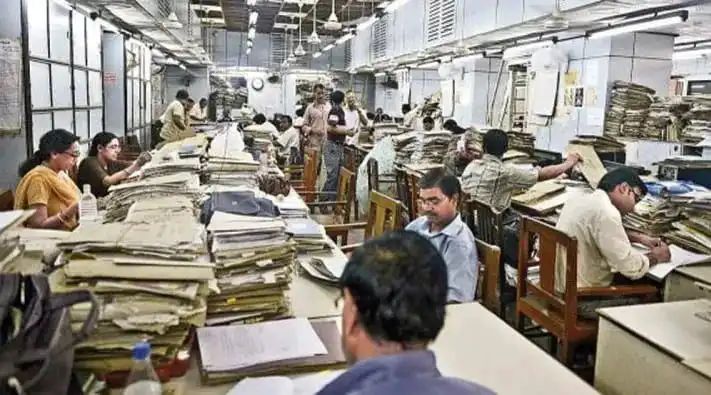
For years, irregular office timings among sections of state government employees had become a subject of public criticism—and even political satire. The popular Bengali phrase, borrowed from a famous song lyric—“Office at 12, home by 4”—had come to symbolize what many saw as an inefficient administrative culture.
That era, the new government appears determined to declare, is over.
A fresh directive issued Tuesday by the Judicial Department at Writers’ Building sends an unmistakably firm message: punctuality is no longer optional.
According to the notification, all state government employees must now report to office by 10:15 AM sharp on every working day. Equally significant, no employee will be allowed to leave before 5:15 PM, effectively restoring the full official workday under long-standing Finance Department rules first laid down in 2000.
The move is being interpreted as part of a larger governance reset aimed at reintroducing professionalism, discipline, and responsiveness into Bengal’s administrative machinery.
Officials familiar with the government’s thinking say the order is designed to improve service delivery, reduce bureaucratic delays, and restore public confidence in state institutions.
Chief Minister Suvendu Adhikari had hinted at such measures even before formally taking office. During the election campaign and in his first remarks after assuming power, he repeatedly emphasized that governance under his administration would prioritize citizens over political patronage.
“The government will now function for the needs of ordinary people—not according to party instructions,” he had said, setting the tone for what now appears to be a broader administrative transformation.
Administrative Shake-Up Beyond Attendance
The attendance crackdown is only one part of a much wider overhaul unfolding inside the state administration.
In another major decision, the new BJP government has ordered the immediate removal of officials who had been retained on contractual reappointment after crossing the age of 60 during the previous Trinamool Congress administration.
A list released from Nabanna on Tuesday includes 232 officers, among them senior IAS and IPS officials associated with critical departments such as finance, education, health, and land administration.
These officials, many of whom had continued in advisory or operational roles after retirement, have now been directed to step down.
The move marks a dramatic break from the previous government’s administrative model, where experienced retired officers were frequently brought back on contract to maintain continuity and institutional control.
The Adhikari government, however, appears to view the practice differently.
Political observers say the twin decisions—strict office attendance and the cancellation of post-retirement reappointments—reflect a deliberate effort to reshape the administrative culture of West Bengal.
“This is not just about punctuality. It is about authority, accountability, and sending a message to the bureaucracy,” said one senior political analyst in Kolkata.
A Push for Youth, Transparency and Efficiency
Administrative experts believe the government is trying to create space for younger officers while reducing dependency on entrenched bureaucratic networks.
By removing retired officials and enforcing full working hours, the state leadership hopes to inject new energy into departments often accused of procedural delays and slow decision-making.
Supporters of the move argue that ordinary citizens stand to benefit the most if government offices become more efficient and accessible.
Critics, however, warn that administrative discipline cannot be achieved through directives alone and that deeper systemic reforms will be necessary to improve governance outcomes.
Still, the symbolism of the decision is difficult to ignore.
For a government eager to distinguish itself from its predecessor, imposing stricter discipline at Writers’ Building—the historic nerve center of Bengal’s administration—is politically and administratively significant.

The message from the top is unmistakable: punctuality, accountability, and administrative performance are now central to the government’s identity.
Whether this “hard medicine” can truly revive efficiency across West Bengal’s bureaucracy remains to be seen. But for now, one thing is clear—the days of leisurely arrivals and early departures in the state secretariat may finally be coming to an end.