
Bharat Newz 24*7
With concerns rising across India over a possible disruption in LPG supplies due to escalating geopolitical tensions in the Middle East, the West Bengal government has moved swiftly to prevent panic and ensure uninterrupted gas availability across the state.
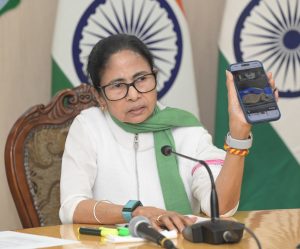
Chief Minister Mamata Banerjee has directed the state administration to implement a special Standard Operating Procedure (SOP) aimed at maintaining a stable LPG supply system. Acting on her instructions, Nabanna—the state secretariat—has issued a comprehensive set of guidelines to monitor supply, prevent hoarding, and ensure that essential services do not suffer because of any shortage.
The state government has also launched a 24-hour helpline for consumers, allowing citizens to report supply issues, overpricing, or refusal by dealers to provide LPG cylinders.
State Moves to Prevent Panic
The move comes against the backdrop of growing public anxiety after the Centre introduced new regulatory measures affecting LPG supply nationwide. State officials believe the restrictions, introduced amid global energy uncertainty, have triggered fears of a possible shortage.
Determined to prevent such fears from turning into real disruption, Mamata Banerjee personally reviewed the situation over the past two days through a series of high-level meetings.
On Wednesday, the Chief Minister met representatives from three major oil marketing companies and LPG distributors at Alipore along with senior officials from the state administration. The meeting focused on reviewing supply chains and assessing the preparedness of distribution networks in West Bengal.
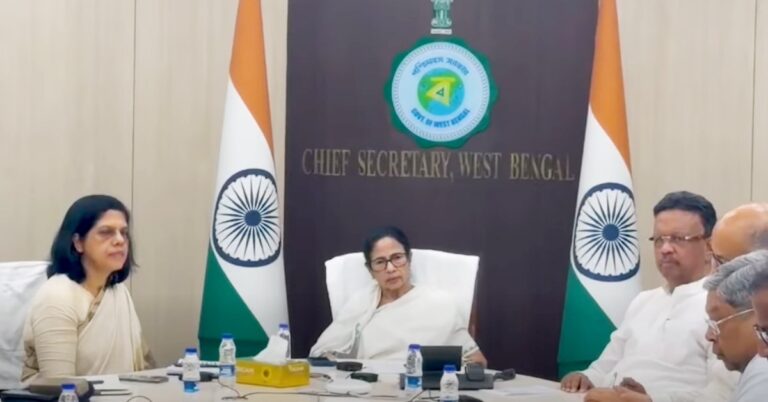
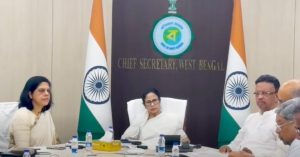
The following day, Banerjee chaired another virtual review meeting from Nabanna with district magistrates and superintendents of police across the state. During the meeting, the Chief Minister made it clear that the government would take a strict stance against black marketing and artificial shortages.
According to officials present at the meeting, Banerjee instructed the administration to maintain constant vigilance and ensure that ordinary households do not face any disruption in cooking gas supply.
Priority Supply System Introduced
As part of the new SOP, the state government has introduced a priority-based LPG distribution system to ensure that essential sectors continue to function smoothly even if supply pressures emerge.
The government has identified several sectors that will receive priority in LPG allocation. At the top of the list are ordinary households, as the administration wants to ensure that domestic kitchens remain functional across the state.
In addition, the state has directed distributors to guarantee uninterrupted supply to school mid-day meal programmes, ICDS centres for children, hospitals, emergency medical services, and institutional kitchens.
Officials say the intention is clear: even under a crisis scenario, basic welfare services must not come to a halt.
Key Guidelines Issued to District Administrations
The SOP circulated by Nabanna lays down several operational instructions for district authorities and law enforcement agencies.
District administrations have been asked to regularly monitor LPG stocks and distribution patterns to detect unusual shortages. Oil companies have also been directed to maintain transparent reporting on supply levels.
Authorities have been instructed to ensure that stock levels are inspected frequently and that abnormal supply disruptions are addressed immediately.
One significant directive involves prioritising households that rely on a single LPG cylinder, ensuring that families with limited reserves receive gas refills quickly.
The government has also instructed LPG distributors to maintain adequate supply to urban and rural households, hospitals, health centres, anganwadi facilities, schools, colleges, government hostels, and welfare homes.
Another major focus of the SOP is preventing black marketing and illegal hoarding. District officials and police have been asked to act swiftly against any complaints of illegal stockpiling or inflated pricing.
Authorities will also monitor whether LPG cylinders meant for West Bengal are being diverted outside the state. If such cases are detected, strict legal action is expected.
Police have been directed to cooperate with supply agencies to ensure that LPG cylinders can be transported quickly between districts whenever necessary.
24-Hour Helpline for Public Complaints
To address consumer concerns directly, Nabanna has launched a round-the-clock helpline system.
Citizens facing problems related to LPG supply—such as refusal by dealers to deliver cylinders, delays in distribution, or demands for extra payment—can lodge complaints through dedicated numbers.
The helpline numbers announced by the state government are:
1070
033-22143526
8697981070
Officials say these lines will remain active 24 hours a day so that both ordinary consumers and institutions relying on LPG can quickly report issues.
High-Level Monitoring Committee Formed
To oversee the situation on a continuous basis, the state government has also formed a high-level crisis monitoring committee.
The committee will function under the supervision of the Chief Secretary of West Bengal and will include senior officials from several key departments. These include the Additional Chief Secretary of the School Education Department, the Principal Secretaries of Disaster Management, Health and Family Welfare, Industry and Commerce, and Food and Civil Supplies.
Other members include the Tourism Secretary, the Home Department Secretary, the Director General of Police, the DG (Law and Order), the Kolkata Police Commissioner, and senior intelligence and enforcement officials.
Beyond LPG, the committee will also monitor the availability of other fuels such as CNG, diesel, petrol, and kerosene, ensuring that the broader energy supply chain remains stable.
A Preventive Strategy
Political observers say the state government’s quick response reflects an attempt to reassure citizens and prevent panic buying or hoarding.
By introducing a clear supply framework, strengthening monitoring mechanisms, and opening direct communication channels with the public, the Mamata Banerjee administration is trying to ensure that even amid global uncertainties, West Bengal’s kitchens, schools, and hospitals continue to function without disruption.
Whether the broader LPG supply situation stabilises or not in the coming weeks, the state government has signaled that it intends to remain firmly in control of the situation.