Bharat Newz 24*7
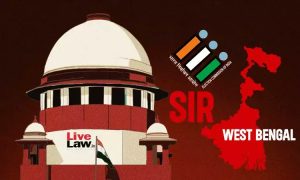
The opposition’s INDIA alliance has once again found itself at the centre of national political attention after 23 opposition parties, along with an Independent Member of Parliament, jointly signed a letter addressed to Chief Justice of India Surya Kant over the controversial Special Intensive Revision (SIR) issue. More significantly, the signatures of the Dravida Munnetra Kazhagam (DMK) and the Aam Aadmi Party (AAP) have reignited speculation over whether the two parties are moving closer to the opposition platform once again.
The development comes at a time when questions have been raised over the cohesion of the INDIA bloc, with several constituent parties choosing independent political paths after the 2024 Lok Sabha elections. While both DMK and AAP have distanced themselves from the alliance in recent months, their decision to endorse the joint letter has sparked fresh political discussions about the future of opposition unity.
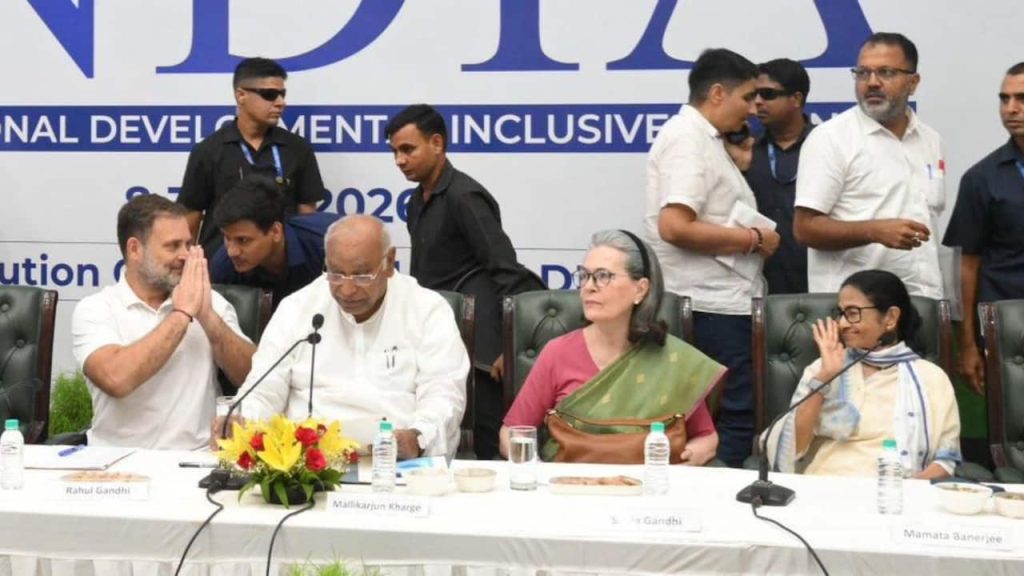
The letter, submitted on Tuesday, was the outcome of a decision taken during a meeting of the INDIA alliance held at Delhi’s Constitution Club on the 8th of this month. During that meeting, opposition leaders agreed to collectively approach the Chief Justice of India over concerns surrounding the SIR process and to demand urgent judicial intervention.
According to opposition leaders, the letter raises several issues, including allegations relating to electoral irregularities, concerns over what they describe as attempts at “vote theft,” and a request that matters concerning the SIR process be heard and resolved by the appropriate tribunal without unnecessary delay.
However, beyond the legal demands contained in the letter, political observers were watching another question even more closely: how many opposition parties would ultimately endorse the initiative.
Support from major INDIA alliance constituents such as the Congress, Trinamool Congress, Samajwadi Party (SP), Rashtriya Janata Dal (RJD) and several others was never in doubt. Together, 21 parties had already indicated that they would sign the letter.
The uncertainty centred around two important regional players—Tamil Nadu’s ruling DMK led by Chief Minister M.K. Stalin and the Aam Aadmi Party led by former Delhi Chief Minister Arvind Kejriwal.
Both parties have maintained varying degrees of political distance from the INDIA alliance after the Lok Sabha elections. Their evolving political calculations had prompted widespread speculation over whether they would associate themselves with a document carrying the INDIA bloc’s collective political signature.
Those doubts were laid to rest when both parties added their signatures to the memorandum submitted before the Chief Justice.
With their participation, the letter ultimately carried the support of 23 opposition parties along with one Independent MP, projecting a broader show of opposition coordination than many had anticipated.
Political sources suggest that the delay in submitting the letter may itself have reflected efforts to build a wider consensus within the opposition camp. Although the proposal to write to the Chief Justice was finalised during the Constitution Club meeting on the 8th, nearly three weeks elapsed before the document was formally submitted.
According to sources familiar with the discussions, additional time was taken to ensure that parties such as the DMK and AAP were comfortable associating themselves with the initiative, thereby strengthening the collective political message behind the letter.
Even so, neither party has indicated that its decision to sign the memorandum should be interpreted as a formal return to the INDIA alliance.
Leaders from both organisations have reportedly maintained that their support is issue-based rather than an indication of renewed organisational alignment with the opposition bloc.
Their position is straightforward: they endorsed the letter because they agreed with its contents and the concerns it raises regarding the SIR process. Beyond that, neither party has committed to rejoining the alliance or participating in any broader opposition strategy at this stage.
This nuanced position reflects the changing nature of coalition politics in India, where parties increasingly cooperate on specific issues while preserving their political independence in state-level and national electoral contests.
For the Congress and other senior INDIA bloc leaders, however, the optics of the joint letter are politically significant. At a time when the opposition has faced repeated questions over internal cohesion, presenting a document endorsed by 23 parties allows the alliance to project an image of continued coordination on issues relating to constitutional institutions and the electoral process.
The participation of regional parties such as the DMK also reinforces the perception that issue-based cooperation within the opposition remains possible despite electoral differences.
Similarly, AAP’s decision to sign the letter is likely to be closely analysed in political circles. Relations between the party and several INDIA bloc constituents have fluctuated over the past year, particularly after the Lok Sabha elections, making its endorsement of the memorandum an important political signal—even if party leaders insist that no broader conclusions should be drawn.
Whether this episode marks the beginning of renewed opposition unity remains uncertain.
Political analysts believe that the coming months, particularly as Parliament prepares for key legislative debates and several states move towards elections, will determine whether the INDIA bloc can rebuild a durable political consensus or whether cooperation will continue only on selected national issues.
For now, the joint letter to Chief Justice Surya Kant serves as an example of how opposition parties, despite strategic differences, can still come together when they believe a common institutional or constitutional concern requires a collective response.
Whether this limited coordination evolves into a broader political realignment remains an open question. As both the DMK and AAP have made clear, their signatures on the letter reflect support for a specific issue—not necessarily a return to the INDIA alliance.
Even so, the symbolism of 23 opposition parties standing together before the country’s highest judicial institution has injected fresh momentum into the debate over the future of opposition politics in India. In a political landscape shaped increasingly by shifting alliances and regional priorities, even issue-based unity has the potential to influence national political narratives.